

By Yannis Karamitsios
Ukrainian mineral assets: ensuring Ukrainian sovereignty and European partnership — opinion
Trump wants Ukraine’s minerals, but Europe should get its chance too.
This piece was co-authored by Diana Sokotun, a Ukrainian political scientist based in Brussels, working for the support of Ukrainian expatriates and their interests.
The United States aims to cut reliance on China, and Ukraine’s vast reserves offer an opportunity. Leaked documents reveal a Trump administration proposal resembling a commercial deal rather than a partnership, raising sovereignty concerns. Experts call it exploitative and at odds with European investments. Trump’s erratic stance on Ukraine and U.S. political instability add complexity.
Kyiv must avoid becoming a pawn and leverage its resources for its own economy. Will it defend its interests or fall to economic takeover? Europe, meanwhile, sees Ukraine as vital for securing raw materials and refuses to be sidelined. It is important that both sides -Ukraine and Europe- build a close partnership in this area and defend themselves against Trump’s predatory and hostile attitude.
The value of Ukrainian minerals
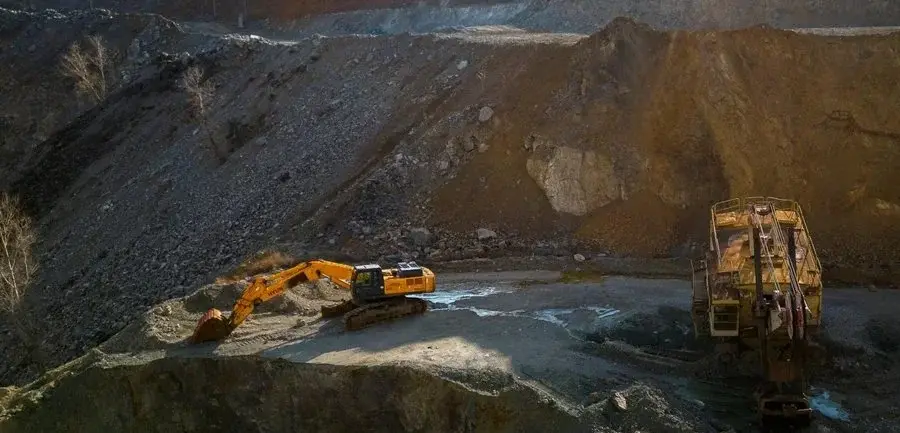
Estimating Ukraine’s mineral wealth is tricky, with figures varying widely. The Ukrainian Geological Survey claims up to $15 trillion, while SecDev [Canadian consultancy firm] pegs Russian-occupied territories’ resources at $350 billion in 2022. Ukraine holds 500,000 tons of lithium—key for EV batteries—worth billions, though unmined. It has 7% of global titanium reserves, mined in Dnipropetrovsk and Zhytomyr, and 19 million tons of graphite for batteries, with Zavallivsky as a key site. Rare Earth Elements (REE), like neodymium, exist but lack modern assessments.
Value depends on feasibility, not just volume. New mines could take 10-20 years and cost $500 million to $1 billion each, factoring in energy and environmental rules. Russia controls 20% of Ukraine’s territory, including 40% of metals and 63% of coal, per SecDev. Global markets add uncertainty—lithium and titanium prices swing, and competition from China (70% of REE processing) and Australia (a top lithium supplier) could limit returns without huge investment.
Operational mines in Ukraine
Before Russia’s 2022 invasion, Ukraine had approximately 20,000 mineral deposits, with 3,055 (15%) active, according to Ukraine Invests’ 2020 figures. However, the conflict has drastically altered this landscape. The Washington Post reported in August 2022 that Kyiv could lose access to two-thirds of its deposits if annexation solidified.
A reasonable estimate, accounting for war losses, suggests fewer than 1,000 mines are currently operational, primarily for coal, iron ore, and titanium in non-occupied zones. Ukraine Invest notes that mining persists in safer regions, with titanium mines sold to private firms in 2023 still operational. Coal mining continues in government-controlled Donbas areas, though at reduced capacity. Lithium and REE mining, however, remain dormant, with projects like UkrLithiumMining’s Polokhivske deposit years from production.
EU access to Ukrainian minerals today
EU’s access to Ukrainian mineral wealth remains very limited.
Its mineral partnership with Ukraine began with a 2021 Memorandum, aiming to secure critical materials and cut China reliance (60% of rare earths). Russia’s invasion intensified this. In February 2025, EU Industry Chief Stéphane Séjourné pitched a “win-win” deal in Kyiv, offering access to 21 of 30 needed materials without sovereignty trade-offs—unlike Trump’s demands.
Challenges persist. Russian occupation blocks mines, war damages infrastructure like the power grid, and security risks deter investors. Still, the EU pushes forward, with a €6 million EBRD (European Bank for Reconstruction and Development) grant for a low-carbon mining strategy. Most European firms involved are mid-tier or juniors focused on exploration, not global giants. The 2024 privatization of UMCC “Titan” went to a Ukrainian bidder, not an EU one. Fewer than a dozen EU firms operate in Ukraine, mainly in studies or small projects in safer regions.
EU financing lags behind the U.S.’s $369 billion Inflation Reduction Act or China’s state support, and banks shy away from risky projects.
Key EU players include today:
Metinvest (Ukrainian, but EU-linked): Supplies coal, iron ore, and steel
ArcelorMittal (Luxembourg): Eyes Ukrainian iron ore for steel
Orlen (Poland): Extracts oil and gas via PKN Orlen
Shell (Netherlands/UK): Focuses on gas, tied to energy minerals
Luxfer Group, VSMPO-AVISMA: Trade Ukrainian titanium for aerospace with many EU clients
Thyssenkrupp, Voestalpine, Salzgitter (Germany/Austria): Source iron ore and coal.
Europe must act: what's next
The EU’s approach—emphasizing mutual benefit and avoiding exploitative terms—may appeal to Ukraine more than U.S. proposals, potentially strengthening EU-Ukraine ties. To access Ukrainian minerals, EU companies should prioritize strategic partnerships and align with the EU-Ukraine 2021 Critical Raw Materials agreement.
First, they could invest in joint ventures with Ukrainian firms, ensuring mutual benefits and compliance with local laws, as subsoil resources belong to the Ukrainian people under their constitution.
By leveraging the EU’s Critical Raw Materials Act, companies should fund modern geological surveys to update outdated Soviet-era data, enhancing investment viability.
They could focus on infrastructure development, such as rebuilding war-damaged energy and transport networks, to facilitate extraction and processing.
Offering technical expertise and sustainable mining practices would strengthen ties and appeal to Ukraine’s reconstruction goals.
Finally, EU firms should advocate for security assurances, potentially through EU-led oversight, to mitigate risks from ongoing conflict.